
Updated 15 September 2026 · 4 minute read
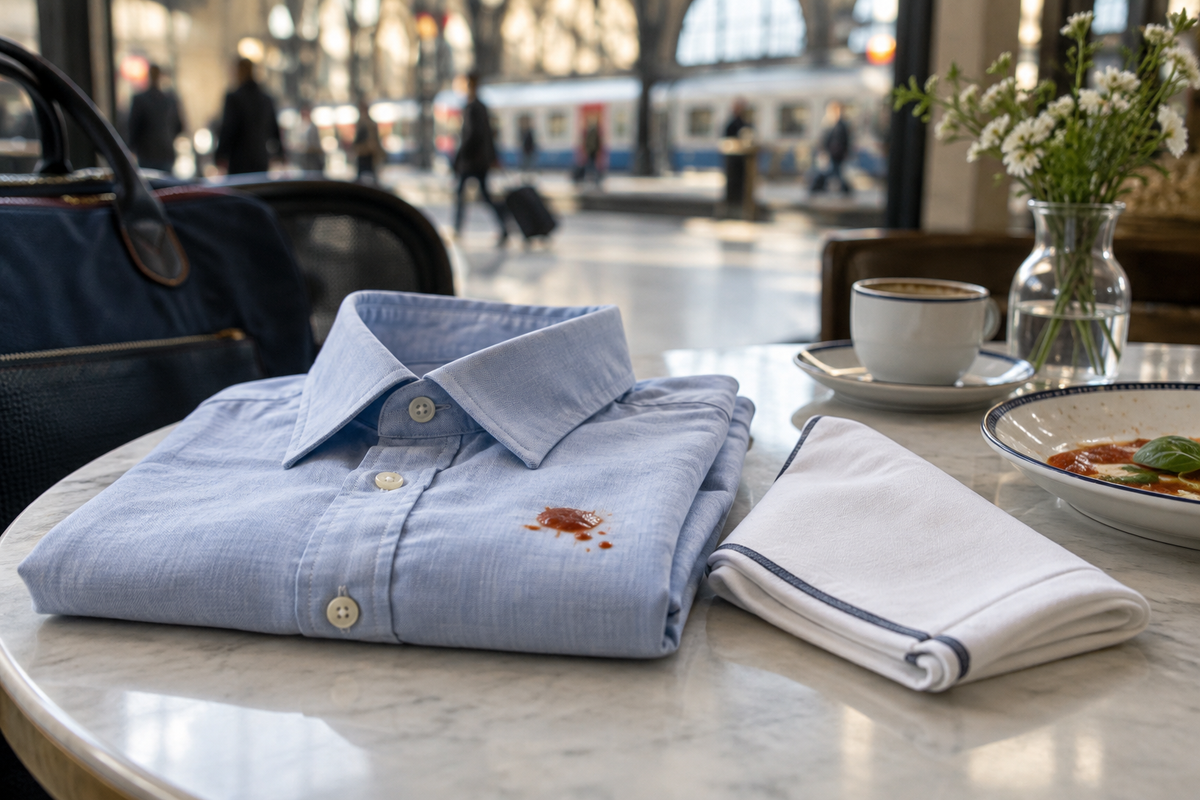
Start by lifting off any food and blotting excess liquid with a clean cloth. Check the care label, put something absorbent behind the fabric and treat a suitable fresh stain gently from the outside in. A stain pen can help without added water, but spot treatment does not replace washing.
First, contain the spill
At a table, on a train or just before a meeting, the useful question is what you can do now. You don’t need to improvise a full wash. Aim to lift what you can without spreading the mark or damaging the fabric.
- Lift solid food with a spoon or the edge of a clean card. Avoid wiping it across the clothing.
- Blot liquid with a clean white cloth or napkin, pressing and lifting rather than rubbing.
- Place an absorbent cloth behind the affected area so the spill does not transfer to another layer.
- Check the garment label before adding any water or product.
Choose a treatment that suits the fabric
A stain pen
For an appropriate fresh stain, a pen lets you apply a small amount of solution to a local area. With Steradol, test a hidden area first and let it dry fully. Then press the tip gently to release solution, rub gently from the outside in and blot with a clean cloth. Avoid soaking the fabric, and let the treated area air-dry.
“No added water needed” means you don’t need a tap to use Steradol. It does not mean the formula contains no water: water is one of its listed ingredients.
A clothing stain wipe
A wipe designed for clothing is another option if its instructions permit use on your garment. Follow its label, including any rinsing instructions. A baby wipe, makeup wipe or disinfecting wipe is not interchangeable with a fabric stain product.
A lightly dampened cloth
If the fabric is washable and the care label permits it, a clean cloth lightly dampened with cool water may help lift a fresh spill. Test first, blot gently and keep the wet area small. This may improve the mark without removing it completely.
Gentle blotting only
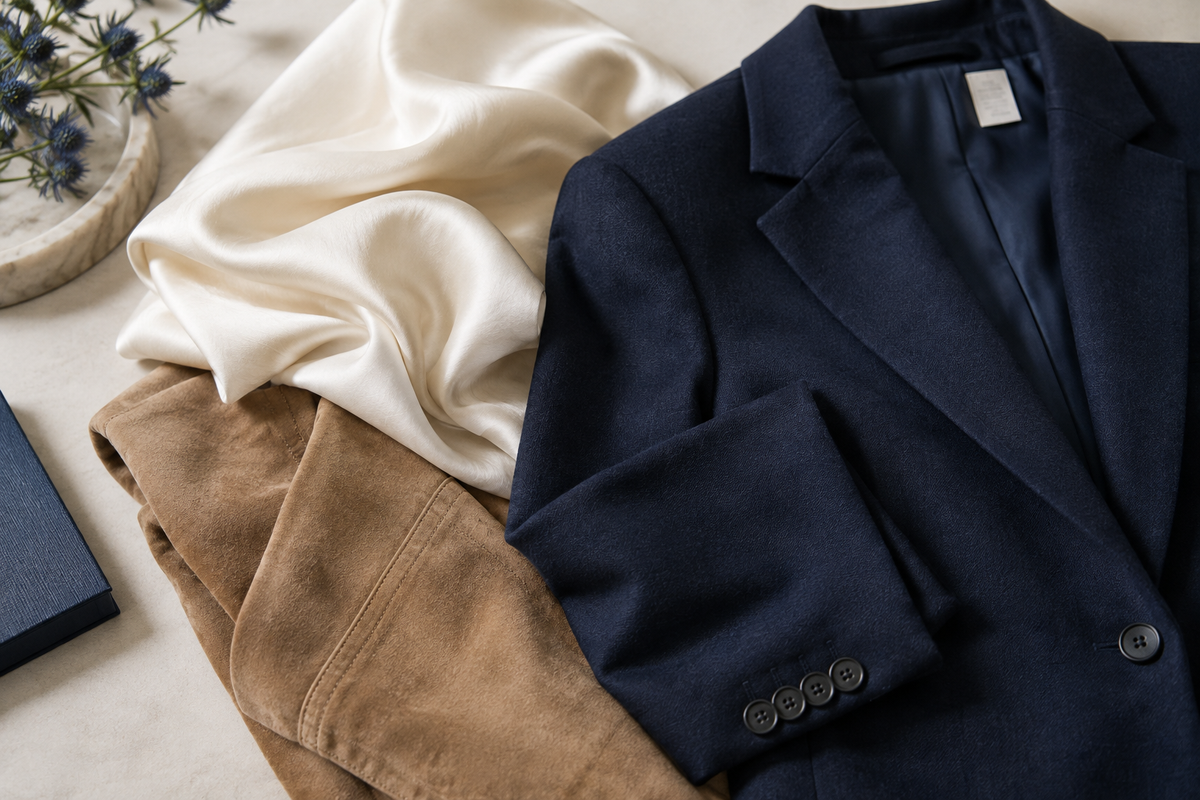
For silk, leather or dry-clean-only items, do not use Steradol. Gently blot excess liquid with a clean dry cloth and contact a suitable professional cleaner. For delicate finishes or an unclear label, stopping is better than experimenting.
What changes the result?
- Age: fresh marks are generally easier to tackle than dried-in stains.
- Stain type: coffee, sauce, grease and ink behave differently. Even inks vary by formulation.
- Fabric: fibre, dye, finish and garment construction all matter. Washable does not automatically mean suitable for every spot treatment.
Steradol is intended for fresh stains. Older marks and oily residues may need a suitable laundry pre-treatment followed by washing. Avoid promises that any method will remove every stain on the spot.
What not to do
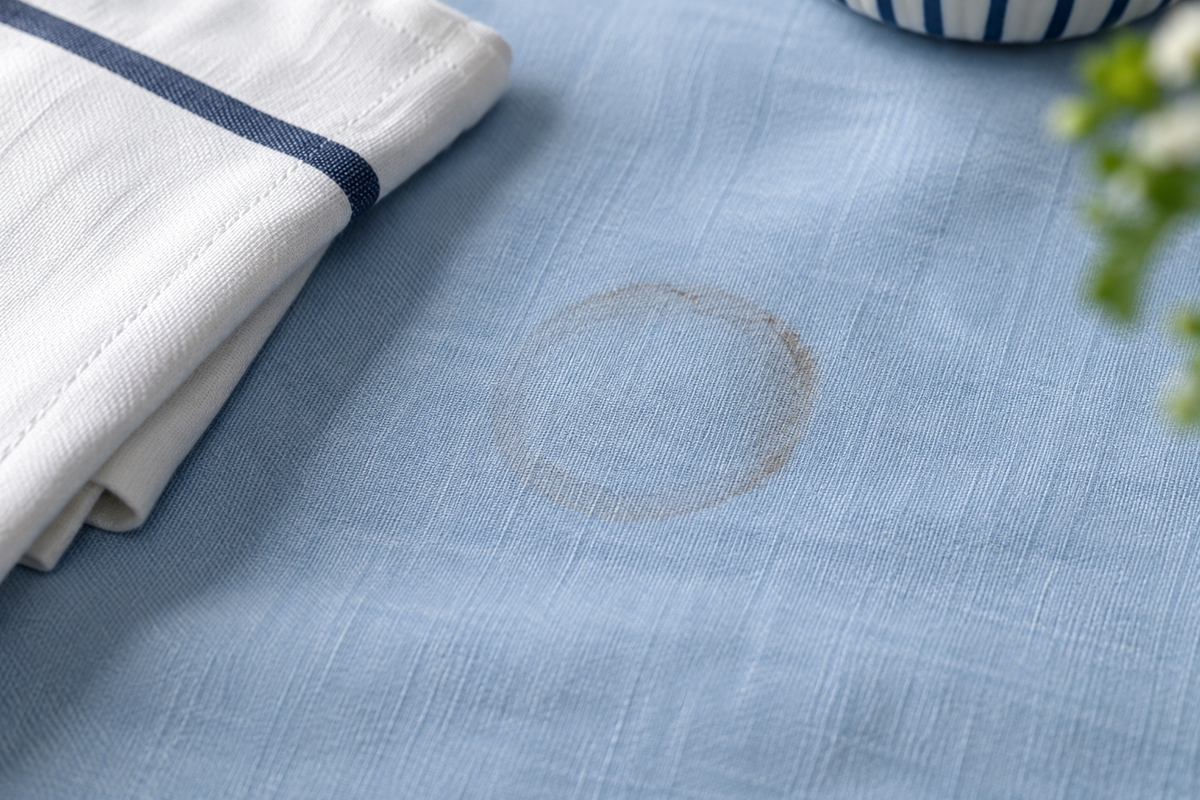
Don’t scrub, pile different cleaning products onto one another or use hand soap simply because it is nearby. Avoid a hand dryer or other direct heat while a mark remains. Too much liquid can leave a larger wet patch or a drying ring.
Finish the job at home
Wash according to the garment care label and any treatment directions. Check the result before heat-drying, and seek professional advice for a stubborn mark on a valuable or delicate item.
Common questions
Can I treat a dried stain this way?
These steps focus on fresh spills. Dried stains may need a different laundry treatment; repeated spot treatment is not a guaranteed fix.
Is a bleach-free pen safe on all colours?
No. Dyes and finishes can still react. Always test a hidden area and let it dry before deciding.
What if it leaves a watermark?
Read why a stain remover can leave a mark before applying more liquid.
Before you use Steradol
Works on fresh stains. Not suitable for silk, leather or dry-clean-only fabrics. Always test on a hidden area first and follow the garment care label and product instructions.
Shop Steradol stain remover pens — three 9ml pens per pack, with 1, 2 and 3-pack options.

Share:
How to Get a Coffee Stain Out of a White Shirt at Work
Does Steradol Contain Bleach?